Three Essential Game-Labs Strategy Games: Gettysburg, Civil War, and Dreadnoughts
Last checked: October 2, 2026.
Table of Contents
ToggleGame-Labs has built its reputation around historical warfare that asks players to do more than move units toward an objective. Terrain, morale, formation, supply, weapon range, armor and command decisions all matter. Its games often place the player between two roles: historian and field commander.
Three titles show that design philosophy particularly well. Ultimate General: Gettysburg concentrates on one famous battle and lets it unfold in different directions. Ultimate General: Civil War expands the idea into a long campaign where casualties and army development carry forward. Ultimate Admiral: Dreadnoughts moves the studio’s attention to steel warships, combining ship construction with naval combat.
These are not three versions of the same game. Together, they trace how Game-Labs moved from detailed battlefield tactics to campaign management and then to the engineering and strategy of modern naval warfare.
| Game | Main focus | Best fit |
|---|---|---|
| Ultimate General: Gettysburg | One branching, multi-day battlefield | Players wanting a focused tactical introduction |
| Ultimate General: Civil War | Persistent army and long campaign | Players wanting land battles with long-term consequences |
| Ultimate Admiral: Dreadnoughts | Ship design and naval campaigns | Players who enjoy engineering trade-offs and fleet experiments |
Swipe the table sideways to see all columns.
A short history of Game-Labs
Game-Labs was founded in 2013 and became known primarily for historical strategy and simulation games. The studio’s early identity was closely tied to the Ultimate General series, which emphasized readable controls, large formations and battlefield systems such as morale, line of sight, cover and terrain.
In May 2021, Stillfront Group completed its acquisition of Game Labs for an upfront consideration of USD 32.5 million. Stillfront described the studio as a developer of strategy and action games, while Game-Labs continued operating within the group.
Company ownership is only background, however. The more useful way to understand Game-Labs is through the growing scale of its games: first a single historical battlefield, then an army across an entire war, and finally fleets designed from the hull upward.
Ultimate General: Gettysburg — the focused battlefield experiment
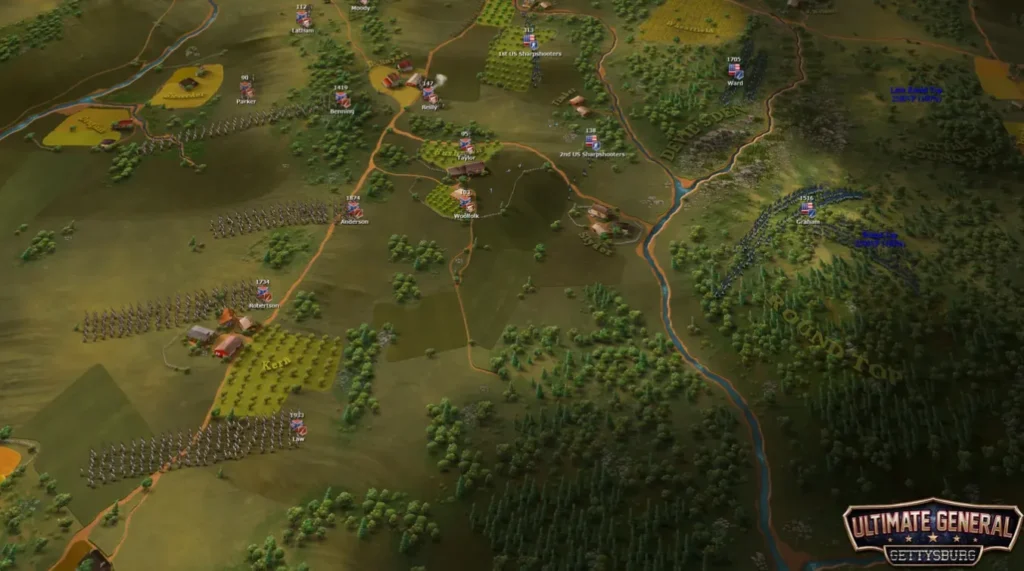
Released in 2014, Ultimate General: Gettysburg was the first title in the Ultimate General series. It lets players command either the Union or Confederate army during the Battle of Gettysburg. The subject is narrow, but the battle is not presented as a single fixed script. View the Steam listing.
One battle, many possible outcomes
Gettysburg is divided into phases that can extend across several days. What happens in one phase affects the next: positions may change, reinforcements can arrive under different circumstances, and the player may face new choices based on earlier performance.
Historical forces and locations provide the framework, but the player is not required to reproduce the historical outcome. A successful defense, failed assault or unexpected breakthrough can push the battle onto a different path.
Terrain, morale, and line of sight
Ridges can improve visibility and firing positions. Forests and buildings can provide concealment or cover. Fatigue, casualties, artillery fire and flank attacks can damage morale even before a unit is destroyed. Positioning can therefore matter more than raw numbers.
Command without excessive micromanagement
Movement arrows and formation-aware units make large battles manageable. Players can issue broad orders while units attempt to form lines, switch targets or withdraw according to the situation.
Who is it for? Players who want a focused historical battle, branching scenarios and a direct introduction to the series’ tactical systems.
What is the limitation? The game is centered on Gettysburg rather than a complete war. No verified YUPLAY product page was found during this check, so this article does not attach a purchase link to the title.
Ultimate General: Civil War — the same ideas on a larger campaign
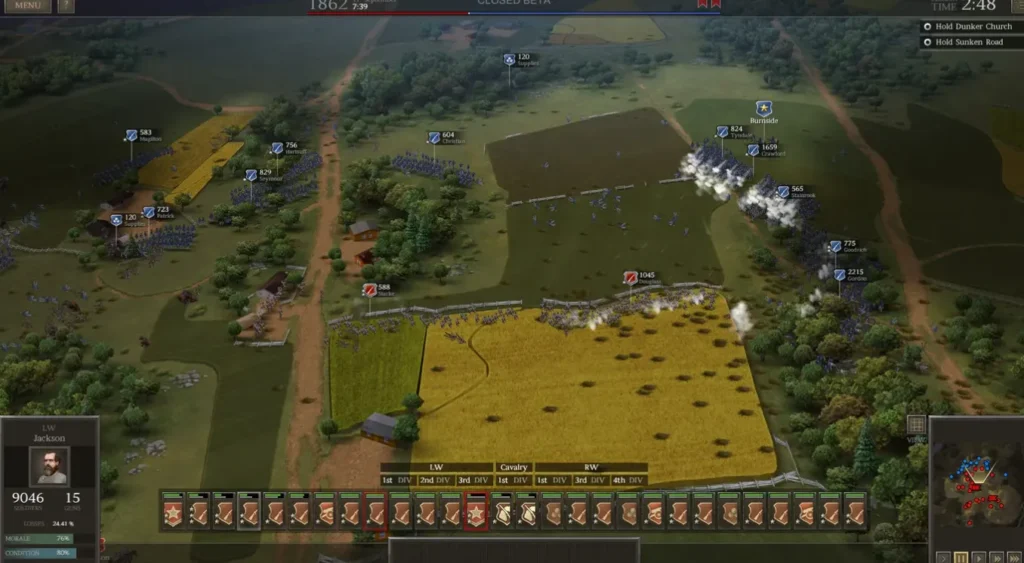
Ultimate General: Civil War takes the tactical foundation of Gettysburg and expands it across the American Civil War. The official description includes more than 50 battles, from smaller engagements to large multi-day operations. Historical battles can be played separately, but the campaign is where the systems connect. Read the official game overview.
Battles now have long-term consequences
Casualties carry weight because brigades, officers and equipment persist across the campaign. Experienced soldiers can become more effective, while the loss of veterans or a capable officer may weaken the army later. A victory obtained through excessive losses can create a strategic problem even when the immediate result looks positive.
Building and organizing an army
Players control the composition of corps, divisions and brigades. They can assign weapons, add or replace officers, reinforce units and decide how limited resources should be distributed. Protecting a veteran brigade is therefore about preserving an asset that may be difficult to replace.
A wider range of battle problems
Civil War retains terrain, morale, cover, flanking and supply considerations while placing them across many maps and mission types. Players may need to defend a position, attack fortified ground, protect artillery, raid supplies or manage reinforcements across a broad battlefield.
Who is it for? Players who want a long land-war campaign, army progression and tactical battles that influence one another.
What is the limitation? Campaign mistakes accumulate. Players who dislike replacing losses and managing equipment may prefer the narrower focus of Gettysburg.
YUPLAY currently lists the game, but activation platform, supported country, stock and price must be checked on the live page. Check the Civil War product details.
Ultimate Admiral: Dreadnoughts — strategy begins at the shipyard
Ultimate Admiral: Dreadnoughts moves away from 19th-century land formations and into the age of steel warships. Its defining feature is not simply naval combat: the player designs ships before sending them into battle, making engineering choices part of the strategy. View the Steam listing.
Designing a warship is a strategic decision
Players can select hulls and configure armor, guns, towers, funnels and internal upgrades. Weight distribution, stability, speed, armor protection and weapon placement influence how a ship behaves in combat. A heavily armed design may become slow or unstable, while a lighter ship may maneuver well but struggle under concentrated fire.
Testing designs in battle
Custom battles and Naval Academy scenarios provide controlled ways to test ships and fleets. A design that looks efficient on paper may reveal poor firing arcs, weak protection or an unsuitable engagement range once shells begin to land. The campaign expands those decisions across a fleet and strategic map.
A different kind of historical strategy
Dreadnoughts is less about reproducing one exact battle than exploring the technological logic of the naval arms race. Historical ships can inspire a design, but the system also supports speculative vessels and alternative fleet doctrines.
Who is it for? Players who enjoy ship construction, armor and armament trade-offs, fleet experimentation and early-20th-century naval warfare.
What is the limitation? Its English Steam review summary was Mixed when checked. Read recent feedback about campaign behavior, AI and the design systems you care about before buying.
YUPLAY has a product page for Dreadnoughts. Verify region, platform, edition, inventory and discount on the live page. Check the Dreadnoughts product details.
What connects these three games?
Decisions have consequences
A poor position in Gettysburg can break a brigade. Heavy losses in Civil War can weaken the next battle. A badly balanced ship in Dreadnoughts can fail before the fleet’s broader plan has a chance to work.
Historical detail supports gameplay
Maps, weapons, formations and ships are not included only as decoration. They create constraints that shape what the player can do. Terrain limits movement and visibility; weapons have different effective uses; hull and armor choices influence naval performance.
The player is given room to change history
Gettysburg can branch away from the known battle. Civil War campaigns change according to army performance. Dreadnoughts allows players to design fleets that never existed. Historical limits plus player agency are the clearest thread running through the three titles.
Which one should you start with?
- Choose Ultimate General: Gettysburg for one famous battle, clear tactical problems and a smaller overall commitment.
- Choose Ultimate General: Civil War for the most complete land campaign, persistent units and long-term army development.
- Choose Ultimate Admiral: Dreadnoughts if designing ships and testing naval doctrines is more appealing than commanding infantry formations.
For most players interested in Game-Labs’ land-war design, Civil War is the most complete starting point. Gettysburg remains the focused tactical introduction, while Dreadnoughts serves a different audience built around ship engineering and naval combat.
Final thoughts
Game-Labs’ historical strategy games are most interesting when they make command feel like a sequence of imperfect decisions. Gettysburg asks whether you can read one battlefield. Civil War asks whether you can preserve and develop an army across many battles. Dreadnoughts asks whether the fleet you imagined can survive the physical compromises built into its ships.
That progression—from battlefield tactics to campaign consequences and naval engineering—explains why these three games remain useful entry points into the studio’s work. The right choice depends less on which title is newest and more on which type of command you want to practice.
Sources and update note
- Ultimate General official series site
- Ultimate General: Civil War official page
- Steam: Ultimate General — Gettysburg
- Steam: Ultimate General — Civil War
- Steam: Ultimate Admiral — Dreadnoughts
- Stillfront acquisition announcement
Last checked: October 2, 2026. Product availability, prices, activation regions and Steam review summaries can change.